VDG INSIGHTS | Automotive Industry Outlook
From Safety Drivers
to No Drivers:
How Autonomous Vehicles Are Entering UK Roads in 2026

From Trials to Public Roads
Once, self-driving vehicles were seen as futuristic and unlikely to arrive any time soon. However, by 2026, this reality is beginning to take shape on UK roads. Self-driving trials in the UK first began in January 2015 as government-backed initiatives alongside companies such as Wayve and Oxa. These early trials aimed to position the UK at the forefront of innovation in connected and automated mobility.
Safety remained the main priority during early trials, with drivers and supervisors present at all times and strict measures enforced through speed limits and predefined routes. Drivers were required to undergo safety training, as autonomous driving technology was still developing and real-world conditions remained unpredictable, meaning human intervention was still essential. These trials enabled the collection of valuable data to improve system performance and, most importantly, helped build public and regulatory trust.
The UK government's Automated Vehicles Act 2024 was introduced following extensive research and trials conducted across the UK. Although the Act will not be fully implemented until 2027, it established clear regulations regarding liability and safety, setting high standards that automated vehicles must meet before being permitted on public roads. These early trials laid the groundwork for the autonomous vehicle testing currently taking place throughout the UK.
The Shift Towards Driverless Transport
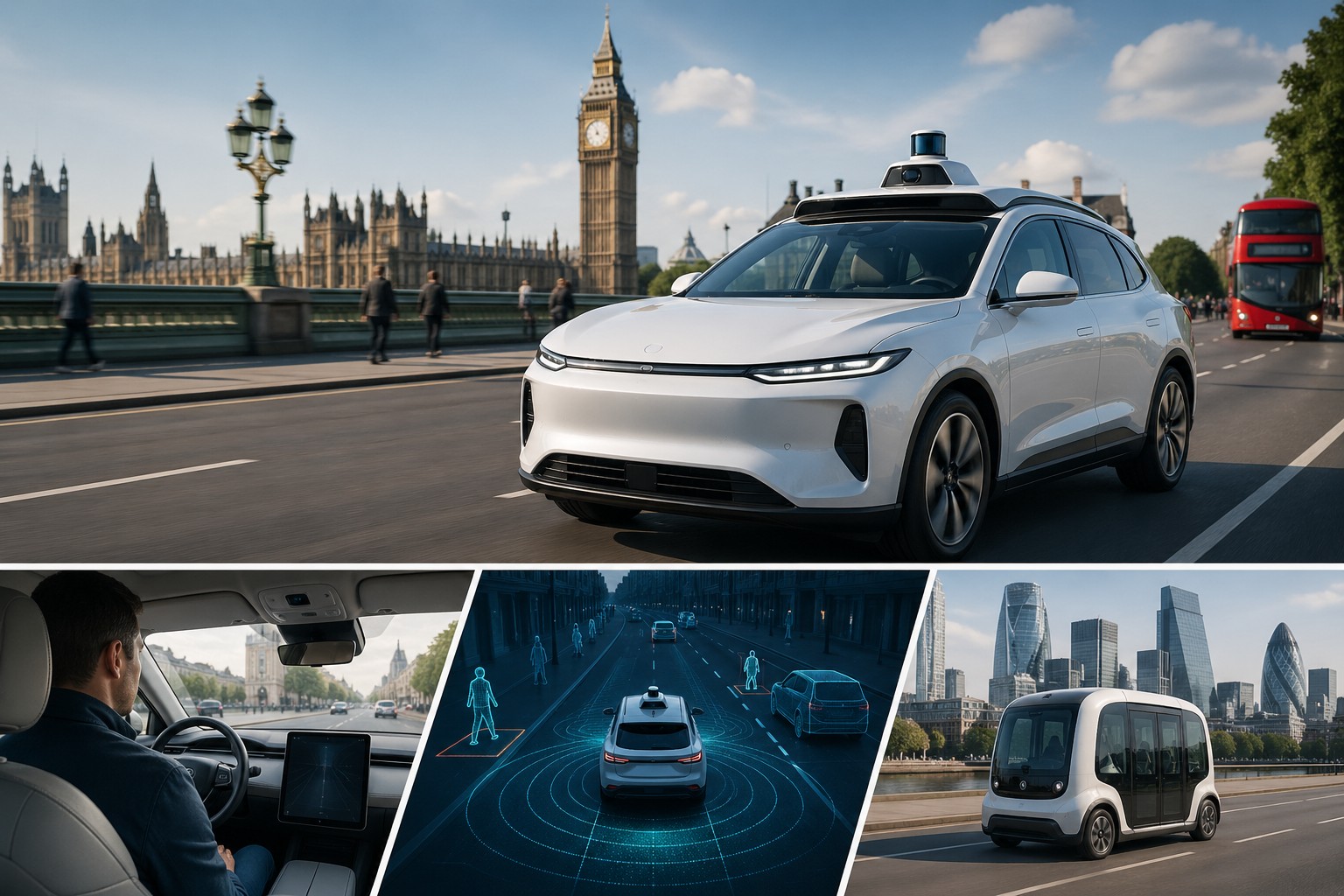
In June 2025, the UK government announced a fast track to introducing commercial self-driving pilots as early as Spring 2026. These trials would allow taxis and bus-like services to operate without a driver for the first time, potentially enabling members of the public to book journeys through app-based services. At the same time, Uber and Wayve revealed plans for their first fully autonomous vehicle trial in London, also scheduled for Spring 2026, marking the first deployment since their partnership began.
The UK has entered a transitional stage involving mixed trials both with and without safety drivers. This phase represents a significant technological step forward. Advances in artificial intelligence (AI) and real-world testing are making autonomous systems increasingly capable and dependable. Continued testing in mixed environments will support further development, helping systems adapt to a wider range of driving conditions that they are not yet fully able to handle.
Ahead of the government's robotaxi trial, the Ford Mustang Mach-E was spotted in London in February using advanced AI technology to navigate the city's challenging roads. This marked an important milestone in the transition towards fully driverless services and formed part of wider efforts by technology companies and automotive manufacturers to prepare autonomous vehicles for public use.
Although driverless trials remain limited to specific locations and controlled environments, this approach is intentional and essential for safe deployment. Restricting operations geographically allows regulators and operators to closely monitor vehicle performance, assess responses to real-world conditions, and ensure strict safety standards are met. It also enables further data collection to ensure vehicles are not only technologically advanced, but also safe, trusted, and ready for wider everyday use before broader rollout.
Job Creation or Destruction?
With the government's plans to fast track self-driving vehicle pilots, they have made predictions for the creation of around 38,000 jobs. While this can present major economic opportunities, on the other hand, this is likely to create concerns for existing transport workers.
Autonomous vehicle technology growth is undoubtedly likely to stimulate innovation, investment, and employment across new sectors. Highly skilled roles are expected to emerge across the UK in areas such as AI, software engineering, cybersecurity, data analysis, and infrastructure development. As autonomous systems continue to be tested and developed, there will also be an ongoing demand for research and development, creating additional opportunities for researchers, safety specialists, fleet managers, and technicians.
However, despite these opportunities, those working in traditional driving professions, such as taxi drivers, private hire operators, and delivery drivers, are likely to feel increasing uncertainty about the future of their roles. In the UK, there are reportedly over 381,000 licensed taxi and private hire drivers, alongside approximately 15,900 licensed black cab drivers in London alone, according to the latest Transport for London figures from May 2026. Not only does this highlight the large number of workers who could potentially be affected by the gradual introduction of autonomous vehicles, but it also raises wider economic and social concerns regarding employment stability and workforce transition.
One primary attraction of autonomous transport for consumers is the possibility of cheaper ride fares. Companies would no longer need to pay driver wages, leading not only to lower costs for passengers but also increased profits for businesses. However, this could place many drivers at risk of losing their jobs, as autonomous vehicles may gradually replace human drivers following wider deployment. Without sufficient support to current driving professionals, the worry is that many of them risk facing long-term unemployment or even financial insecurity during this transitional phase to automated transport systems.
Ultimately, although autonomous vehicles may deliver economic and technological benefits, they also risk disrupting traditional employment across the transport industry. Ensuring a fair transition for affected workers will therefore be essential as the UK moves towards increasingly automated transport systems.
An Autonomous Future
As the UK moves closer towards the full implementation of the Automated Vehicles Act in 2027, the transition from supervised trials to fully driverless services is only just beginning. While challenges remain surrounding regulation, safety, public confidence, and the impact on employment, the progress made so far demonstrates how rapidly the technology is evolving. The coming years are likely to significantly shape the future of transport, influencing not only how people travel, but also how industries and workforces adapt to increasing automation.
Whether through booking a driverless taxi via an app or seeing autonomous vehicles navigate busy city streets, the future of mobility is arriving faster than many expected. One thing is certain: the road ahead is becoming increasingly autonomous.